Low vision affects millions of people worldwide, impacting their ability to perform everyday tasks and maintain independence. At Ensight Skills Center, we believe that raising awareness about low vision is the first step toward creating a more inclusive and accessible world. Here are five meaningful ways you can support low vision awareness in your community.
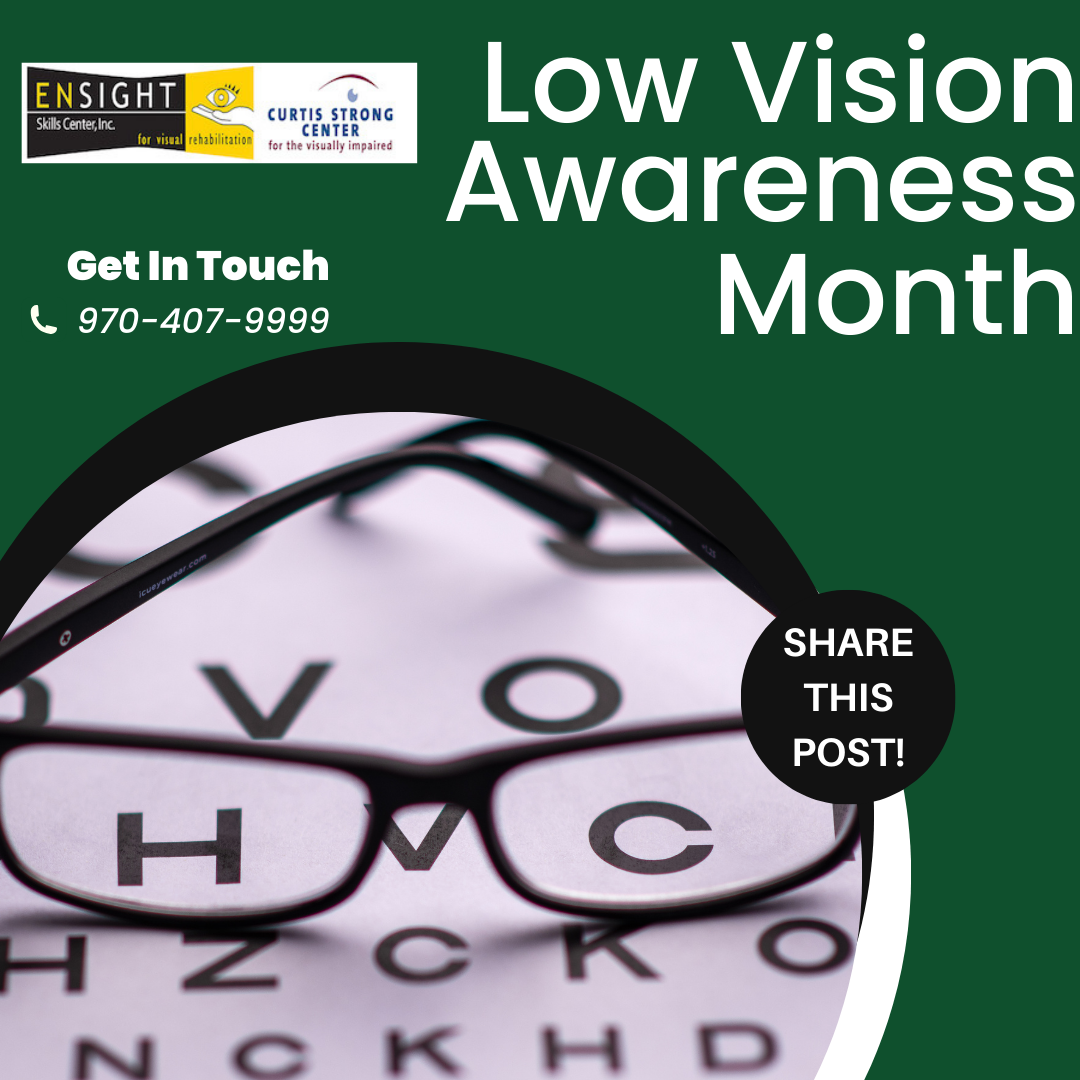
>ALT TEXT: Social media graphic with dark green background promoting Low Vision Awareness Month. Features the Ensight Skills Center and the Curtis Strong Center for the Visually Impaired logos in the top left corner. The ‘Get In Touch 970-407-9999’ contact information appears in white text on the left side. Large white text reading ‘Low Vision Awareness Month’ spans the top right. Central image shows eyeglasses resting on an eye chart with visible letters. Black circular badge in bottom right reads ‘SHARE THIS POST!’ in white text.<
1. Educate Yourself and Others
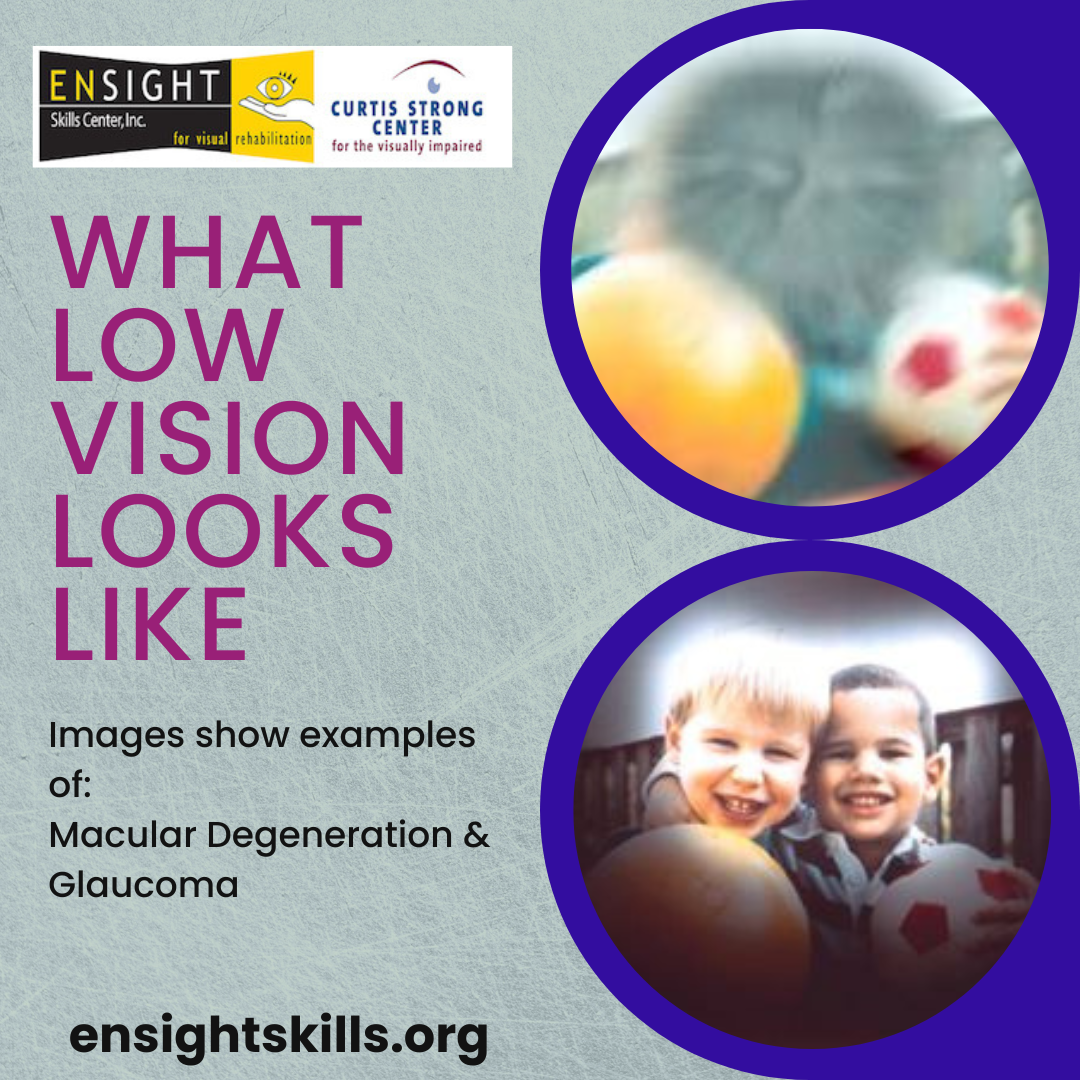
Understanding low vision is crucial to supporting those who live with it. Low vision is not the same as blindness—it refers to significant visual impairment that cannot be fully corrected with glasses, contact lenses, medication, or surgery. Take time to learn about the different causes of low vision, including macular degeneration, glaucoma, diabetic retinopathy, and other conditions. Share this knowledge with friends, family, and colleagues to help dispel common misconceptions and foster empathy
2. Advocate for Accessible Spaces
Accessibility isn’t just about ramps and elevators. For people with low vision, proper lighting, high-contrast signage, tactile markers, and clear pathways make a tremendous difference. Advocate for these features in public spaces, workplaces, and community centers. If you’re in a position to influence design decisions, prioritize accessibility from the start. Small changes, such as ensuring adequate lighting in hallways or using large, clear fonts on signs, can have a significant impact.
3. Support Organizations and Research
Organizations like Ensight Skills Center provide vital services, training, and resources to individuals with low vision. Consider supporting these organizations through donations, volunteering, or participating in fundraising events. Additionally, supporting research initiatives helps advance treatments and technologies that can improve the quality of life for people with low vision. Every contribution, no matter the size, makes a difference.
4. Promote Assistive Technology
Technology has opened new doors for people with low vision. From screen magnification software and text-to-speech applications to specialized lighting and electronic magnifiers, assistive technology empowers individuals to work, learn, and live independently. Help spread awareness about these tools by sharing information on social media, hosting informational sessions, or simply talking about them with people in your network. The more people know about what’s available, the more lives can be changed.
5. Practice Inclusive Communication
When interacting with someone who has low vision, small, thoughtful adjustments can make communication more effective and comfortable. Identify yourself when approaching, describe your surroundings when relevant, and ask if assistance is needed rather than assuming it is. In written communication, use clear fonts, adequate spacing, and high contrast between text and background. These practices not only support individuals with low vision but also create a culture of inclusivity and respect.
Join Us in Making a Difference
Low Vision Awareness Month is observed every February, but supporting those with low vision is a year-round commitment. By educating ourselves, advocating for accessibility, supporting research and organizations, promoting assistive technology, and practicing inclusive communication, we can all help create a more accessible world.
At Ensight Skills Center, we’re dedicated to empowering individuals with vision loss to achieve their goals and live fulfilling, independent lives. Together, we can raise awareness and build a community where everyone has the opportunity to thrive.
To stay connected and up to date on the latest opportunities and success stories, we encourage you to follow Ensight across all our social media platforms. Visit Ensight Skill Center’s Homepage for a comprehensive overview of our programs, sign up for our Newsletter, and connect with us on Facebook, LinkedIn, and Instagram to gain access to valuable resources, inspiring stories, and updates on all of our upcoming events.
Frequently Asked Questions: Low Vision Awareness
What is low vision?
Low vision is a significant visual impairment that cannot be fully corrected with glasses, contact lenses, medication, or surgery. It’s not the same as blindness—people with low vision have some remaining sight, but it’s not sufficient for everyday tasks without assistance or adaptive strategies.
What causes low vision?
Low vision can result from various eye conditions and diseases, including:
- Macular degeneration
- Glaucoma
- Diabetic retinopathy
- Cataracts
- Retinitis pigmentosa
- Eye injuries or trauma
- Other hereditary or age-related conditions
How common is low vision?
Low vision affects millions of people worldwide. The risk increases with age, making it particularly prevalent among older adults, though people of all ages can experience low vision.
What is Low Vision Awareness Month?
Low Vision Awareness Month is observed every February to raise awareness about low vision, educate the public about available resources and support, and advocate for the needs of individuals living with vision impairment.
How can I help someone with low vision in public spaces?
When interacting with someone who has low vision:
- Identify yourself when approaching
- Describe your surroundings when relevant
- Ask if assistance is needed rather than assuming
- Avoid grabbing their arm—offer yours instead
- Give clear, specific directions (e.g., “The door is three steps to your left”)
- Don’t leave without saying goodbye
What makes a space accessible for people with low vision?
Accessible spaces for people with low vision include:
- Proper and adequate lighting
- High-contrast signage with large, clear fonts
- Tactile markers and indicators
- Clear, unobstructed pathways
- Well-defined edges and boundaries
- Minimal glare from windows and lighting fixtures
What types of assistive technology are available?
Common assistive technologies for low vision include:
- Screen magnification software
- Text-to-speech applications
- Electronic magnifiers
- Specialized lighting systems
- Large-print materials
- High-contrast keyboards
- Video magnifiers
- Smart glasses and wearable devices
How can I make written materials more accessible?
To create accessible written materials:
- Use clear, sans-serif fonts (at least 12-14 point size)
- Ensure high contrast between text and background
- Provide adequate spacing between lines and paragraphs
- Avoid italics and decorative fonts
- Offer materials in multiple formats (large print, digital, audio)
- Use simple, straightforward language
What does Ensight Skills Center do?
Ensight Skills Center provides vital services, training, and resources to individuals with low vision and blindness. The organization is dedicated to empowering people with vision loss to achieve their goals and live fulfilling, independent lives through skills training, support services, and advocacy.
How can I support low vision awareness and research?
You can support low vision awareness by:
- Educating yourself and sharing information with others
- Donating to organizations like Ensight Skills Center
- Volunteering your time and skills
- Participating in fundraising events
- Supporting research initiatives
- Advocating for accessibility in your community
- Promoting assistive technology and resources on social media
Can people with low vision work and live independently?
Yes! With appropriate training, assistive technology, and accessible environments, many people with low vision lead independent, productive lives. They work in various professions, pursue education, maintain homes, and participate fully in their communities.
Where can I learn more about low vision?
You can learn more by:
- Contacting organizations like Ensight Skills Center
- Visiting reputable vision health websites
- Consulting with eye care professionals
- Attending Low Vision Awareness Month events in February
- Connecting with local support groups and advocacy organizations
How do I know if I or someone I know might have low vision?
Signs of low vision may include:
- Difficulty reading, even with glasses
- Trouble recognizing faces
- Needing more light for tasks
- Difficulty with glare
- Loss of central or peripheral vision
- Challenges with daily activities like cooking, shopping, or navigating
If you experience these symptoms, consult an eye care professional for a comprehensive evaluation.
For more information about vision loss support services, rehabilitation, and community resources, contact the Ensight Skills Center or consult with your eye care professional.