Podcasts are one of the most accessible ways for people with low vision to learn, laugh, and feel connected. There are no small fonts to squint at and no screens to strain over. You press play and listen. For people living with low vision or blindness, that ease is a gift, and the right show can feel like a conversation with a friend who gets it.
Whether you want to master your iPhone, hear stories that sound like your own days, or find support for the emotional side of vision loss, there is a podcast for you. Here are some favorites from the low vision and blind community, grouped by what you might be looking for.
Technology and Accessibility
That Real Blind Tech Show features news, reviews, and professional insights on accessible technology, shared by a blind host with a touch of humor.
Blind Abilities focuses on assistive technology, iPhone demos, career pathways, and independent living resources.
The AppleVis Podcast is dedicated to Apple product accessibility and app reviews for blind and low vision users.
Seeing in the Dark, hosted by Thomas Domville, details iOS, Windows, and software accessibility from a blind perspective.
Lifestyle, Daily Life, and Humor
Low Vision Moments, hosted by Jennie Bovard, is a monthly comedy and story-driven show that shares funny, real-life situations of navigating the world with low vision.
The Be My Eyes Podcast offers bi-weekly interviews and stories covering the blindness and low vision community, assistive technology, and daily life tips.
Eyes On Success, hosted by Nancy and Peter Torpey, is a weekly program with practical tips, adaptation skills, and stories from people managing vision loss.
Health, Mental Health, and Advocacy
inSight Out, hosted by Matthew Reeves, a legally blind therapist, offers tools and stories for building mental health and resilience with vision loss.
Low Vision Beyond the Clinic explores multidisciplinary low vision rehabilitation, clinical insights, and patient-centered care.
The Blind Chick explores creative careers, life, and personal stories within the low vision and blind community.
Happy Listening
You can find most of these shows in your favorite podcast app, such as Apple Podcasts or Spotify, or by asking your smart speaker or voice assistant to play them by name. If one doesn’t click, try another. Every host brings a different voice and perspective.
At Ensight Skills Center, we believe that people with low vision can live full, independent lives, and that learning from one another is a big part of that. Have a podcast that has helped you? We would love to hear about it. Share your favorites with us and your fellow community members.
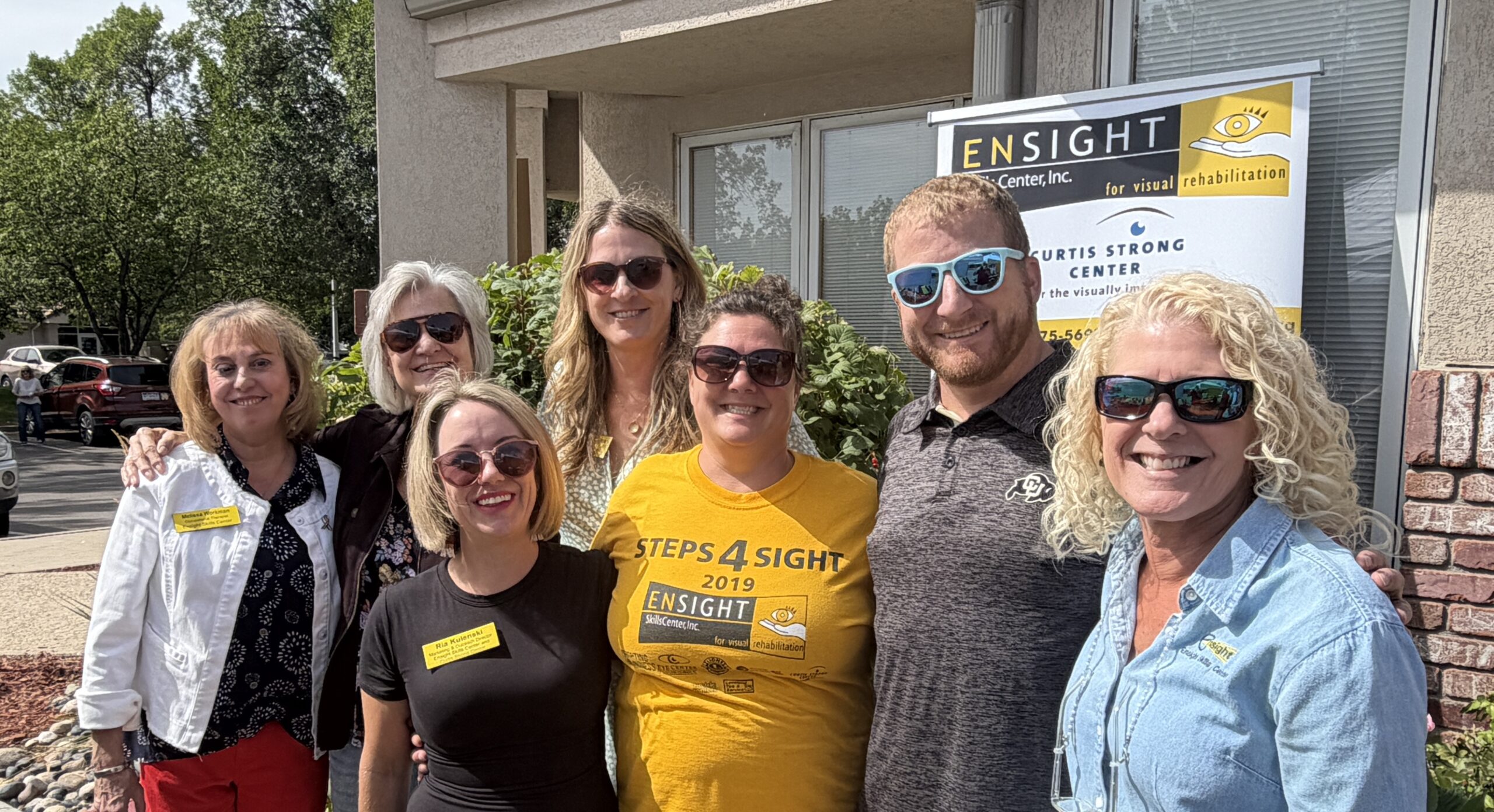
To stay connected and up to date on the latest opportunities and success stories, we encourage you to follow Ensight across all our social media platforms. Visit Ensight Skill Center’s Homepage for a comprehensive overview of our programs, sign up for our Newsletter, and connect with us on Facebook, LinkedIn, and Instagram to gain access to valuable resources, inspiring stories, and updates on all of our upcoming events.
Frequently Asked Questions (FAQS)
What is low vision?
Low vision is a significant visual impairment that cannot be fully corrected with glasses, contact lenses, medication, or surgery. It’s not the same as blindness, people with low vision have some remaining sight, but it’s not sufficient for everyday tasks without assistance or adaptive strategies.
What causes low vision?
Low vision can result from various eye conditions and diseases, including:
- Macular degeneration
- Glaucoma
- Diabetic retinopathy
- Cataracts
- Retinitis pigmentosa
- Eye injuries or trauma
- Other hereditary or age-related conditions
How common is low vision?
Low vision affects millions of people worldwide. The risk increases with age, making it particularly prevalent among older adults, though people of all ages can experience low vision.
What makes a space accessible for people with low vision?
Accessible spaces for people with low vision include:
- Proper and adequate lighting
- High-contrast signage with large, clear fonts
- Tactile markers and indicators
- Clear, unobstructed pathways
- Well-defined edges and boundaries
- Minimal glare from windows and lighting fixtures.
What types of assistive technology are available?
Common assistive technologies for low vision include:
- Screen magnification software
- Text-to-speech applications
- Electronic magnifiers
- Specialized lighting systems
- Large-print materials
- High-contrast keyboards
- Video magnifiers
- Smart glasses and wearable devices
What does Ensight Skills Center do?
Ensight Skills Center provides vital services, training, and resources to individuals with low vision and blindness. The organization is dedicated to empowering people with vision loss to achieve their goals and live fulfilling, independent lives through skills training, support services, and advocacy.
How can I support low vision awareness and research?
You can support low vision awareness by:
- Educating yourself and sharing information with others
- Donating to organizations like Ensight Skills Center
- Volunteering your time and skills
- Participating in fundraising events
- Supporting research initiatives
- Advocating for accessibility in your community
- Promoting assistive technology and resources on social media
Can people with low vision work and live independently?
Yes! With appropriate training, assistive technology, and accessible environments, many people with low vision lead independent, productive lives. They work in various professions, pursue education, maintain homes, and participate fully in their communities.
Where can I learn more about low vision?
You can learn more by:
- Contacting organizations like Ensight Skills Center
- Visiting reputable vision health websites
- Consulting with eye care professionals
- Attending Low Vision Awareness Month events in February
- Connecting with local support groups and advocacy organizations
Where can I listen to these podcasts?
Most podcasts are available in popular podcast apps such as Apple Podcasts and Spotify, and many are also on the host’s own website. You can also ask a smart speaker or voice assistant to play a show by name.
Do I need to be blind or have low vision to enjoy them?
Not at all. Family members, friends, caregivers, and professionals can learn a great deal from these shows. They offer a real look at daily life with vision loss.
Are podcasts free?
Most podcasts are free to listen to. Availability can vary by show and by app, so check the listing in your podcast app for details.
I’m new to podcasts. Which one should I try first?
It depends on what you’re looking for. If you want to get more comfortable with your phone or computer, try the AppleVis Podcast or Blind Abilities. If you want stories and laughs, start with Low Vision Moments. If you’re looking for emotional support and encouragement, try inSight Out.
How often do new episodes come out?
Every show keeps its own schedule. Low Vision Moments is monthly, The Be My Eyes Podcast is bi-weekly, and Eyes On Success is weekly. For the others, check the show’s page in your podcast app.
Can I listen hands-free?
Yes. Most podcast apps work with voice assistants and screen readers, so you can search, play, pause, and skip without looking at a screen. Check your device’s accessibility settings to see what is available.
Are these podcasts affiliated with Ensight Skills Center?
No. These are independent shows from the wider low vision and blind community that we think are worth sharing. Opinions and advice are those of the hosts and guests.
Can a podcast replace professional care or training?
Podcasts are a wonderful source of information and encouragement, but they don’t replace guidance from your eye care provider or low vision professionals. Talk with your care team about your individual needs.
I know a great podcast that isn’t on your list. Can I suggest it?
Yes, please do. We love hearing what is helping our community, and we may feature your recommendation in a future post.
For more information about vision loss support services, rehabilitation, and community resources, contact the Ensight Skills Center or consult with your eye care professional.