As the year winds down, we want to pause and say something we can never say enough: thank you.
Every gift you have given to Ensight Skills Center has made a real difference. Your generosity has helped a neighbor learn to use a magnifier at the right focal length so they can read their mail again. It has helped someone master a smartphone, cook a meal with high-contrast tools and raised dots on the stove, or walk confidently down the street with a white cane and an orientation and mobility specialist beside them. Behind each of those moments is a person told their world might get smaller, but who instead discovered it could stay wide open. That is what you make possible!
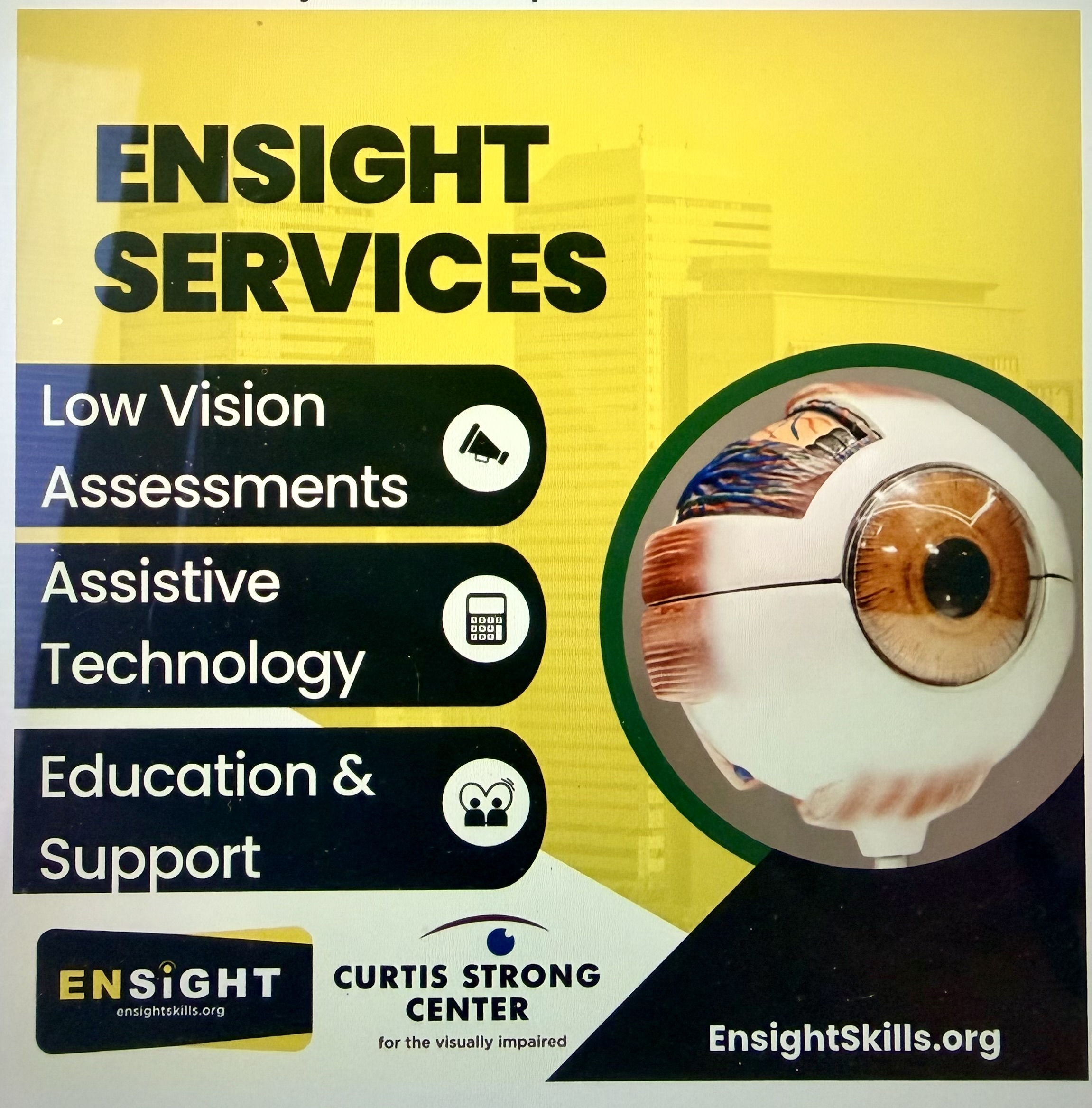
What Your Giving Has Built
Vision loss can feel isolating. Ensight exists so no one has to face it alone. Because of supporters like you, our clients receive:
- Low vision assessments with a low-vision optometrist and occupational therapist
- Personalized visual rehabilitation, including eccentric viewing techniques and strategies for managing glare and contrast
- Training on assistive technology, from electronic magnifiers and CCTVs to screen readers, ZoomText, talking watches, and smart speakers
- Practical help with everyday life, such as low-vision cooking, household tasks, and reading bus signs with telescopic devices
- Support groups and counseling for clients and their families
- Education on preventing blindness and staying safe, including balance classes like Stepping On
Every one of these services is a step toward independence and confidence. And every step starts with a donor who believed it mattered.
Let’s End the Year with a Bang
Here is where we ask for your help once more. The weeks ahead are the most important of the year, and we have big growth goals. More people are living with vision loss than we can currently reach. With your support, we can serve more clients, expand our training and education programs, and put life-changing tools into more hands.
A year-end gift now does more than keep our doors open. It lets us grow.
- $25 helps put a talking watch or high-contrast kitchen tools into a client’s hands
- $50 supports a hands-on technology training session
- $100 helps cover part of a low vision assessment
- $250 helps provide an electronic magnifier that makes reading possible again
Whatever the amount, your gift goes directly toward helping someone see their possibilities more clearly. If you have given before, we hope you will consider giving again. If you are new to Ensight, we would love to welcome you into our community.
How to Give
Visit our website to make a year-end gift today, or reach out to our team to learn about other ways to give, including recurring gifts and gifts in honor of a loved one. Please share this blog with friends, family, and colleagues. Every new supporter helps us grow.
With Gratitude
To every donor, volunteer, partner, and friend: you are the reason our clients leave Ensight with new skills, new confidence, and renewed independence. We could not do this without you.
Thank you for believing in a world where vision loss does not mean losing independence. Let’s make this year-end our best one yet.
At Ensight Skills Center, we believe that people with low vision can live full, independent lives, and that learning from one another is a big part of that. Have a podcast that has helped you? We would love to hear about it. Share your favorites with us and your fellow community members.
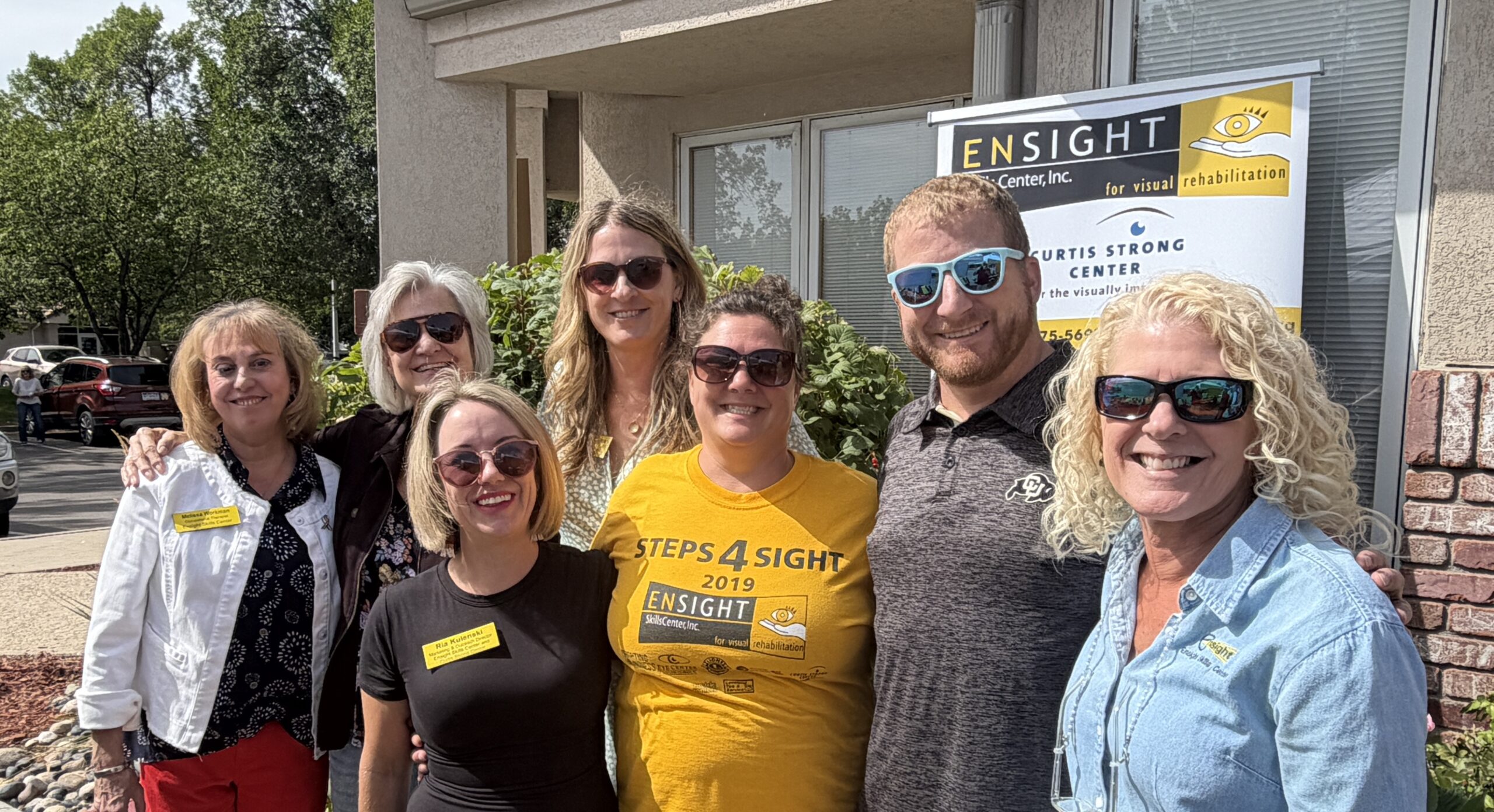
To stay connected and up to date on the latest opportunities and success stories, we encourage you to follow Ensight across all our social media platforms. Visit Ensight Skill Center’s Homepage for a comprehensive overview of our programs, sign up for our Newsletter, and connect with us on Facebook, LinkedIn, and Instagram to gain access to valuable resources, inspiring stories, and updates on all of our upcoming events.
Frequently Asked Questions (FAQS)
What is low vision?
Low vision is a significant visual impairment that cannot be fully corrected with glasses, contact lenses, medication, or surgery. It’s not the same as blindness—people with low vision have some remaining sight, but it’s not sufficient for everyday tasks without assistance or adaptive strategies.
What causes low vision?
Low vision can result from various eye conditions and diseases, including:
- Macular degeneration
- Glaucoma
- Diabetic retinopathy
- Cataracts
- Retinitis pigmentosa
- Eye injuries or trauma
- Other hereditary or age-related conditions
How common is low vision?
Low vision affects millions of people worldwide. The risk increases with age, making it particularly prevalent among older adults, though people of all ages can experience low vision.
What makes a space accessible for people with low vision?
Accessible spaces for people with low vision include:
- Proper and adequate lighting
- High-contrast signage with large, clear fonts
- Tactile markers and indicators
- Clear, unobstructed pathways
- Well-defined edges and boundaries
- Minimal glare from windows and lighting fixtures.
What types of assistive technology are available?
Common assistive technologies for low vision include:
- Screen magnification software
- Text-to-speech applications
- Electronic magnifiers
- Specialized lighting systems
- Large-print materials
- High-contrast keyboards
- Video magnifiers
- Smart glasses and wearable devices
What does Ensight Skills Center do?
Ensight Skills Center provides vital services, training, and resources to individuals with low vision and blindness. The organization empowers people with vision loss to achieve their goals and live fulfilling, independent lives through skills training, support services, and advocacy.
How can I support low vision awareness and research?
You can support low vision awareness by:
- Educating yourself and sharing information with others
- Donating to organizations like Ensight Skills Center
- Volunteering your time and skills
- Participating in fundraising events
- Supporting research initiatives
- Advocating for accessibility in your community
- Promoting assistive technology and resources on social media
Can people with low vision work and live independently?
Yes! With appropriate training, assistive technology, and accessible environments, many people with low vision lead independent, productive lives. They work in various professions, pursue education, maintain homes, and participate fully in their communities.
Where can I learn more about low vision?
You can learn more by:
- Contacting organizations like Ensight Skills Center
- Visiting reputable vision health websites
- Consulting with eye care professionals
- Attending Low Vision Awareness Month events in February
- Connecting with local support groups and advocacy organizations
For more information about vision loss support services, rehabilitation, and community resources, contact the Ensight Skills Center or consult with your eye care professional.